

 The Nightmare
Three common problems were happening at the same time: fixed HVAC schedules, limited visibility of how the office was actually used, and rising energy costs.
The office had changed, but the HVAC schedule had not.
The company was operating in a hybrid-work reality, but heating, cooling and ventilation were still running around static assumptions. Some areas were underused, while energy was still being consumed as if the office was fully occupied.
Every week was the same: energy costs stayed high, utilisation was unclear, and the team had limited evidence to make confident operational decisions.

 The DIREK Fix
DIREK deployed smart sensors across the office and connected the data to the D-XPERT® smart building platform. The goal was simple: understand how the workplace was really being used, then use that evidence to optimise HVAC schedules, energy performance and space planning.
The solution combined real-time occupancy monitoring, AI-powered recommendations and BMS integration to move the building away from static schedules and towards demand-led operation.
1. Real-time occupancy tracking
The usage of the entire 1,322 m² office space was monitored.
2. HVAC connected to real demand
Occupancy data informed heating and cooling schedules.
3. AI-powered recommendations
D-XPERT® improved space planning for hybrid work.
4. Energy spike alerts
The platform helped flag abnormal energy behaviour and potential comfort issues.
5. Built to scale
The approach can start with one office area, expand to full coverage, then roll out across more sites.
For the first time, HVAC decisions were based on live workplace evidence — not assumptions, fixed schedules or outdated usage patterns.
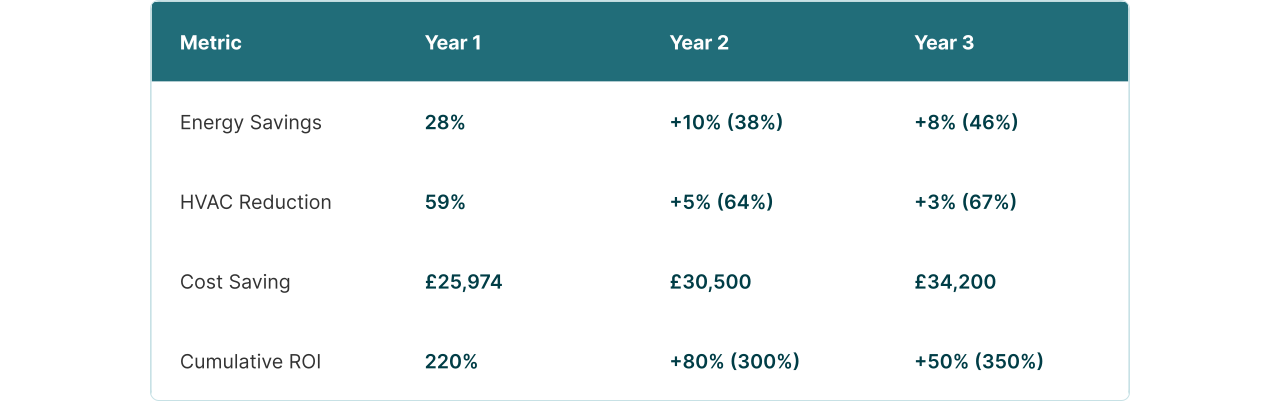
 Results That Redefine ROI
As a leader in the UK construction sector, the company faced underutilised spaces, rising energy costs, and employee comfort concerns at their HQ. They sought a data-driven solution to align their workspace with hybrid work trends, sustainability goals, and operational excellence.
 Impact


FAQ
Learn More by User Questions
Related Case Studies
More success stories from DIREK clients

(+44) 080 0031 8090